What Are Hooded Eyes?
Hooded eyes happen when the skin from the brow folds over the upper eyelid, sometimes hiding the natural crease. This can make the eyes look smaller or more closed, especially if the skin feels heavy. Some people call this droopy eyelids, especially when the skin starts to press down on the eye.
For some, this eye shape is something they’re born with. For others, it shows up slowly with age as the skin becomes thinner and less firm. It’s a normal part of how faces change over time, but it can affect how the eyes look and how someone feels when they see themselves in the mirror.
One way to tell if you have hooded eyes is by looking in the mirror with a relaxed expression. If the skin above your eyes covers most or all of your upper eyelid when your eyes are open, and you can’t easily see the crease, you likely have hooded eyes. You might also notice that eye makeup disappears when applied or that the eyelid feels heavier than it used to.
What Causes Hooded Eyes?
Several factors can contribute to the appearance of hooded eyes. Some develop gradually over time, while others may appear more suddenly. Understanding why they occur is the first step in choosing the right approach.
Genetics
Some people are simply born with hooded eyes. The shape of the brow bone, the amount of skin on the upper eyelid, and how the eyelid folds are all influenced by inherited facial structure.
Weight Loss
Rapid or significant weight loss, particularly when linked to GLP-1 medications like Ozempic, can lead to visible changes in facial volume. This phenomenon, often called Ozempic face, involves a reduction of fat in key areas of the face, including around the eyes. When soft tissue diminishes too quickly, the skin may lose support and start to fold more heavily over the upper eyelid crease, making hooded eyes more noticeable.
Aging
With time, the skin naturally loses firmness and the brow may gradually lower. This creates a heavier look around the upper eyelid and can cause the skin to fold over the crease, especially after the age of 40.
Lifestyle Habits
Factors like sun exposure, smoking, lack of sleep, and chronic stress can weaken the skin’s structure over time. These habits reduce collagen and elasticity, making the skin around the eyes thinner and more prone to sagging.
There are few, if any, at-home solutions that can meaningfully change the structure of hooded eyes. When the goal is to lift or redefine the upper eyelid area, two main approaches exist: non-surgical treatments or surgical procedures.
Non-Surgical Treatments for Hooded Eyes
Plasma Fibroblast Therapy
Plasma fibroblast therapy is a non-invasive treatment that uses a precise electrical arc to create micro-injuries on the surface of the skin. This controlled stimulation triggers collagen production and helps tighten the delicate tissue around the eyes. For individuals with mild to moderate hooding, it can visibly reduce excess skin and improve the appearance of the upper eyelid without surgery.
Brow Lift with Injections
A targeted brow lift can be achieved through precise injections. By relaxing specific areas or providing subtle structural support, this approach can slightly elevate the brow and reduce the appearance of heaviness over the upper eyelid. It’s a minimally invasive option that helps open up the eye area, with natural-looking results and little to no downtime.
High-Intensity Focused Ultrasound
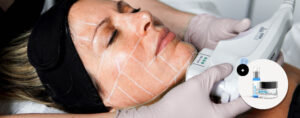
Ultherapy is a non-invasive treatment that uses High-Intensity Focused Ultrasound (HIFU) to stimulate collagen production in the deeper layers of the skin. When applied to the brow area, it can help lift and firm the tissue, reducing the appearance of hooded eyelids over time. By targeting structural support without damaging the surface, Ultherapy offers a gradual, natural-looking improvement for those seeking a non-surgical option.
Laser Treatments
Laser treatments can be used to firm the skin, improve texture, and stimulate collagen production around the eyes. They work by delivering precise thermal energy to targeted layers of the skin, encouraging natural regeneration.
Fractional CO₂ lasers are often used to treat mild to moderate skin laxity in the upper eyelid area. By creating micro-columns of controlled injury, they help remodel the tissue without removing the entire surface layer. Other technologies, like Fotona SmoothEye, offer a non-ablative approach that gently heats the skin to improve firmness over time. Both options can help reduce the appearance of hooded eyelids, depending on the degree of skin laxity and the desired outcome.
Radiofrequency Treatments
Radiofrequency treatments use heat to gently stimulate collagen production and improve skin firmness. When applied around the eyes, they can help tighten the eyelid area and reduce the look of heaviness over time. Depending on the device and how it’s used, this approach can target different layers of the skin to support structure and improve texture. Technologies like Thermage, Exilis Ultra 360 or RF microneedling can be adapted to treat the upper eyelid and brow zone. Results appear gradually, and the treatment is often done in a series of sessions for best effect.
Supporting Regeneration with Exosome Therapy
After certain non-surgical treatments, particularly those that involve skin remodeling or controlled micro-injuries, exosome therapy can be used to support and enhance the skin’s natural recovery process. Rich in growth factors and regenerative signals, exosomes help reduce inflammation, accelerate healing, and improve overall skin quality. While not a treatment for hooded eyes on their own, they can complement procedures like laser resurfacing, microneedling with RF, or plasma fibroblast, helping to optimize outcomes and promote healthier, more resilient skin around the eyes.
Eyebrow Thread Lift
An eyebrow thread lift is a minimally invasive procedure that uses dissolvable threads placed just beneath the skin to gently lift and support the brow area. The most commonly used threads for this treatment are made from polydioxanone (PDO), but other materials like poly-L-lactic acid (PLLA) and polycaprolactone (PCL) may also be used. In addition to providing subtle lift, these threads encourage the skin to produce more collagen over time. This can help improve firmness and definition in the upper eyelid area, with minimal downtime and no surgery required.
Open Your Eyes to a Personalized Solution
Every eye shape is unique, and so is the way hooded eyelids appear and evolve over time. At Dermapure, we focus exclusively on non-surgical, science-backed options to support skin health and improve the appearance of the eye area. A personalized plan may include targeted injections, energy-based treatments, and at-home skincare suggestions such as exosome serums.
Our team takes the time to assess your facial anatomy, skin condition, and goals to guide you toward the most appropriate combination of treatments. The objective is always to enhance your natural features with precision, care, and long-term skin quality in mind.
Surgical Solutions for Hooded Eyes
In certain cases, non-surgical treatments may not provide the level of correction needed to address advanced hooding or significant laxity in the eyelid skin. When that’s the case, a surgical approach may offer the most appropriate and long-lasting result.
Surgical Brow Lift
A surgical brow lift is a cosmetic procedure designed to reposition the brow to a higher, more natural position on the forehead. Over time, the brow can slowly descend, creating pressure on the upper eyelid and contributing to a heavier, more tired appearance. By lifting and securing the tissues above the eyes, this procedure can help reduce that heaviness and restore balance to the upper face. Several techniques exist, including endoscopic and pretrichial approaches, depending on facial anatomy and aesthetic goals. The result is often a more open, rested look, with improved visibility of the upper eyelid area.
Upper Blepharoplasty
Upper blepharoplasty, also called upper eyelid surgery, is a procedure that removes excess eyelid skin and sometimes fat that accumulates with age or facial volume changes. When the skin above the eyes becomes too loose, it can fold over the crease and, in some cases, impair the field of vision. Blepharoplasty is typically performed under local anesthesia and can be both functional and cosmetic in nature. It helps restore a cleaner eyelid contour, improves the visibility of the eyelid crease, and can reduce the sensation of heaviness. Recovery is usually straightforward, with visible results once swelling subsides.
At Dermapure, we do not perform cosmetic surgery. However, if surgical intervention is the most suitable path, we may refer you to a qualified medical specialist. Our role is to offer honest guidance and support in helping you choose the safest and most effective solution for your needs.