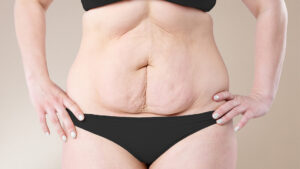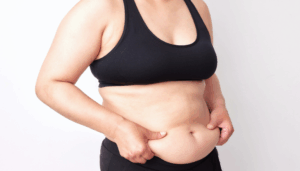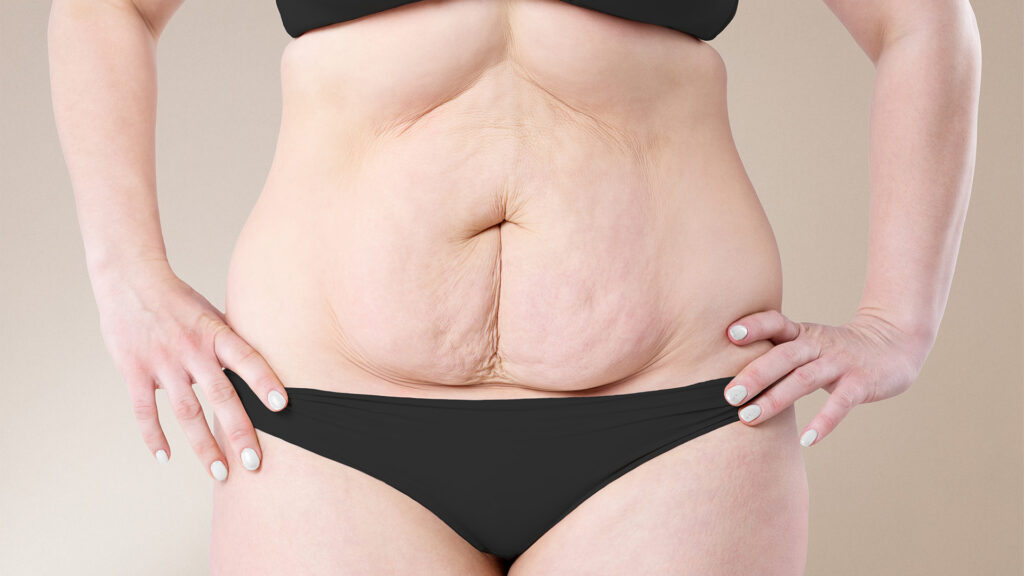
It’s not uncommon to feel discouraged when the skin on your stomach no longer reflects your overall health and efforts. Whether the result of significant weight loss, pregnancy, the natural aging process or the development of an apron belly(also called a “ventre en tablier”), loose skin on the abdomen can remain despite regular exercise and healthy habits.
If your stomach feels less firm with visible folds, wrinkling or a crepey texture, you’re not alone. These changes are often linked to a loss of skin elasticity and collagen and they don’t always improve with exercise, hydration or topical products alone.
The good news is that several solutions exist to help restore firmness and improve the appearance of the abdominal area. In this article, we’ll explore what causes stomach skin to become loose and which approaches from simple at-home care to advanced non-invasive treatments may help you achieve smoother, firmer and more toned skin.
Understanding Why Stomach Skin Becomes Loose or Wrinkled
Several physiological and lifestyle-related factors can lead to a visible loss of firmness in the abdominal area. Here’s why stomach skin may become loose or wrinkled over time:
Significant weight loss
When the body gains weight, the skin stretches to accommodate the added volume. This process affects the structural proteins that support the skin’s firmness, including collagen and elastin. When weight loss occurs rapidly, such as with strict dieting or medications like Ozempic, the skin often does not have enough time to adjust. This can result in loose skin on the stomach, especially if the weight gain and loss cycles repeat over time. Gradual, supported weight loss and proper nutrition may help the skin adapt more efficiently.
Pregnancy and the postpartum period
During pregnancy, the abdominal skin stretches to accommodate the growing uterus, which can weaken the collagen and elastin fibers responsible for skin structure and sometimes lead to visible stretch marks. After childbirth, many people experience sagging or loose skin in the lower abdomen because the skin was stretched so much over a short period of time. Hormonal fluctuations in the postpartum period may also affect skin hydration and elasticity, making it appear thinner, drier or less firm for several months. While these changes are common, the recovery and skin improvement vary from person to person.
Aging and natural skin changes
As we age, the body gradually produces less collagen and elastin. These proteins are essential for keeping the skin firm, elastic and smooth. This natural decline can lead to thinner skin, reduced tone and visible laxity, especially on the stomach. Slower cell renewal and lower hydration levels also affect the skin’s texture and resilience. These changes are part of the normal aging process and vary from person to person.
Lifestyle and environmental stressors
Daily habits and environmental exposure play a major role in skin quality. Frequent sun exposure can damage collagen fibers and accelerate signs of aging. Smoking, dehydration, high stress levels and a lack of essential nutrients all reduce the skin’s natural ability to stay firm. Low physical activity may also contribute to muscle loss, making sagging skin more visible. Prioritizing hydration, using sun protection and eating a diet rich in vitamins like vitamin C can help support healthier skin over time.
Together or individually, these factors reduce the skin’s ability to adapt, stretch, and contract. This leads to visible skin laxity on the stomach. The good news is that depending on your skin’s condition, there are ways to support or restore its firmness — from medical treatments to lifestyle changes.
How To Tighten Loose Skin on the Stomach
How Can I Support My Stomach Skin at Home to Improve Firmness?
Improving the appearance of the abdominal area often begins with consistent, daily habits. Hydration, movement and targeted skincare all help maintain skin health, elasticity and tone. These at-home strategies play a valuable role in prevention and maintenance, especially after pregnancy or weight fluctuations.
- Skincare Products: Daily hydration is essential. Retexturing Body Cream by Functionalab nourishes deeply, supports the skin barrier and improves elasticity, especially after pregnancy or weight changes.
- Supplements: Collagen peptides, vitamin C, zinc, omega-3s and oral hyaluronic acid may support collagen production, hydration and tissue repair. Always consult a healthcare provider before starting new supplements.
- Exercise and Muscle Toning: Strengthening the core with targeted exercises like Pilates or swimming improves muscle tone and supports firmer skin from within.
- Daily Habits: Staying hydrated, eating nutrient-rich foods, applying SPF daily, and avoiding smoking all contribute to healthier, more resilient skin. Maintaining a stable weight helps minimize further stretching, while simple practices like gentle stimulation during skincare application may also encourage circulation and support the skin’s natural processes over time.
However, when skin laxity, stretch marks or reduced muscle tone become more visible, topical care alone may not be enough. In those cases, professional in-clinic treatments can offer deeper, more targeted results.
Non-Surgical Skin Tightening Options
When it comes to abdominal concerns, there is rarely a one-size-fits-all solution. Depending on your body’s unique changes, such as reduced skin elasticity, weakened core muscles or the appearance of stretch marks, different technologies can work in synergy to restore tone, firmness and confidence.
Loss of Skin Firmness
Skin that appears loose, crepey or sagging is often the result of collagen and elastin breakdown over time. Non-surgical energy-based devices can reactivate these fibres to gradually restore firmness.
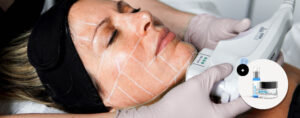
- RF microneedling, such as Morpheus8 or Endymed Pro, combines ultrafine needles with radiofrequency energy to reach multiple layers of the skin. This dual action triggers deep tissue remodeling while also refining surface texture. It is one of the most frequently recommended options to treat laxity on the abdomen, especially when skin quality and tone are both affected.
- Thermage delivers unipolar radiofrequency deep into the dermis while keeping the skin’s surface cool. It helps remodel existing collagen and encourages the production of new fibres, making it ideal for mild to moderate laxity.
- Venus Freeze uses multipolar radiofrequency with pulsed electromagnetic fields to boost circulation and stimulate collagen from within, improving overall skin tone and elasticity.
- EMTONE combines radiofrequency with acoustic wave therapy to treat both superficial laxity and deeper connective tissue issues. This improves the look and feel of sagging or uneven skin.
Loss of Muscle Tone
When sagging skin is accompanied by weakened abdominal muscles, especially after pregnancy or significant weight changes, targeting the core can improve definition and support. In this context, non-invasive body contouring technologies can help strengthen muscles while enhancing the overall appearance of the midsection.
- Electone uses electrostimulation to activate deep abdominal muscles. It enhances posture and gradually builds core strength from within.
- Emsculpt triggers deep, supramaximal muscle contractions using electromagnetic energy. This helps build muscle mass and redefines the abdominal wall, particularly when reduced tone contributes to a sagging appearance.
- Emsculpt NEO combines this muscle stimulation with radiofrequency energy to also target unwanted fat. This dual action enhances body contouring results by improving both tone and firmness, without surgery or downtime.
Stretch Marks
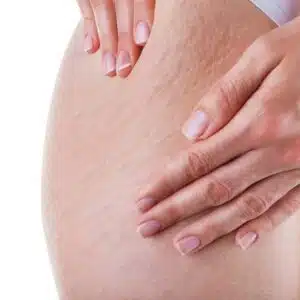
Stretch marks can appear due to pregnancy, weight fluctuations or rapid growth. Their appearance changes over time. Newer marks often look red or purple, while older ones tend to fade to a silvery tone. Laser technologies offer effective, non-invasive options to improve both colour and texture.
- RF microneedling, such as Morpheus8 and Endymed Pro, delivers radiofrequency energy through ultrafine needles at different skin depths. This stimulates collagen production in a controlled, targeted way and is particularly effective for softening the texture of stretch marks, especially when they are accompanied by mild skin laxity.
- Fractional laser treatments, including CO₂ options, create controlled micro-channels in the skin to stimulate collagen production and support natural skin renewal. This process helps refine the texture of mature stretch marks while contributing to firmer, more resilient skin.
- Vascular lasers are designed to treat red, early-stage stretch marks by targeting the underlying blood vessels. This reduces visible redness and helps calm local inflammation.
Building a Personalized and Effective Approach
Non-surgical skin tightening is never a one-size-fits-all approach. The most effective results often come from a personalized treatment plan that considers your skin quality, level of laxity, muscle tone, and goals. In many cases, combining treatments such as Thermage for collagen stimulation, Emsculpt for muscle definition, and laser technology for surface refinement can lead to more complete and visible improvements.
If your skin condition is more advanced or if non-surgical options are unlikely to meet your expectations, a surgical procedure may be more appropriate. While Dermapure does not offer surgical treatments, we will gladly refer you to trusted professionals when surgery is the better option.
A consultation allows us to assess your skin and create a customized plan based on your needs, lifestyle, and budget with the goal of achieving the best possible results through safe and proven medical aesthetic care.
Who Is a Good Candidate for Non-Surgical Treatments?
You may be a good candidate if:
- Your skin shows mild to moderate laxity, without significant excess or sagging
- You prefer a non-invasive approach with minimal downtime
- You’re ready to commit to a series of sessions, as most treatments require multiple visits
- You have realistic expectations, and understand that outcomes vary from person to person
- If you are postpartum, it’s generally recommended to wait a few months after giving birth to allow your body to recover naturally before starting treatment
A consultation will help determine if non-surgical treatments are right for your skin, your goals, and your overall plan.
Surgical Skin Tightening Procedures
At Dermapure, we do not perform surgical procedures, but our medical aesthetic experts can help determine whether surgery would be a more appropriate solution for your concerns. When necessary, we’ll guide you in the right direction and help you understand what to expect if you choose to consult with a plastic surgeon.
Tummy Tuck: Full, Mini, Extended, Circumferential
A tummy tuck is a surgical procedure that removes excess skin and fat from the abdominal area. When necessary, it also involves tightening the abdominal muscles if they have become stretched or separated due to pregnancy or significant weight fluctuations. This approach is generally recommended in cases of pronounced skin laxity where non-surgical treatments are no longer effective. It offers a more immediate and visible transformation by addressing both surface and structural concerns. Recovery usually requires about ten to fourteen days of rest, followed by a few weeks of limited physical activity. While early changes are noticeable within the first weeks, final results appear gradually as the body heals and swelling subsides.